Have you encountered the “Windows resource protection found corrupt files but was unable to fix some of them” error while running SFC (System File Checker)? If yes, then don’t fret, you are in the correct place. It happens due to several reasons, such as software conflicts, hardware failures, etc. Regardless of the reasons, this error can be easily fixed by applying a handful of solutions mentioned in this blog.
So, let’s get started with this post!
Free Hard Drive Data Recovery Tool.
Recover data from USB drives, Pen drives, SSDs, HDDs, and other devices on Windows. Try now!
What Does Windows Resource Protection Found Corrupt Files Mean?
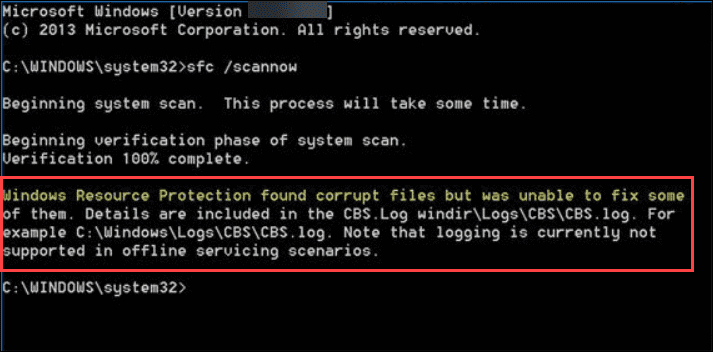
The “Windows Resource Protection found corrupt files” is an error message that usually occurs when your SFC tool fails to scan your protected system files.
Generally, it is integrated within an SFC scan & works to safeguard your important system files as well as registry keys. Since it protects your essential components, some of its resources also become inaccessible to the administrators.
When you receive this error message, it simply means that your SFC utility has found corrupted or missing system files but was unable to repair them by replacing them with cached copies.
It can happen when the cached files, which have been used to replace the corrupted files, become corrupt themselves. This error can take place on your system due to multiple reasons. To know them, you need to scroll down to the next section.
What Causes “Windows Resource Protection Found Corrupt Files” Error?
These are the common factors that can cause this issue. Let’s have a look at them:
- SFC has insufficient resources to solve the issue.
- Some of the Nvidia files (.dll) are corrupted
- Due to the corrupt system files
- Interference of third-party apps or operating system processes.
How To Fix Windows Resource Protection Found Corrupt Files
Before executing any of the methods, make sure to save a backup copy of your essential data. This is because this error might corrupt your Windows data.
Please Note – If you forgot to create a backup of your vital data, use professional Data recovery software to retrieve your lost data.
#1: Run DISM From The Command Prompt
The DISM (Deployment Image Servicing and Management) is a powerful Windows utility that can be used to check and repair Windows images.
If the SFC scan fails to resolve certain issues, run the DISM utility; it may be able to fix the problem.
Here’s how to do so:
- Go to the Start menu and type cmd in the Windows search box.
- Then, right-click on the Command Prompt & select Run as administrator.

- In the command prompt window, you need to type a command: dism /online /cleanup-image /restorehealth

- At last, press Enter and wait till the process gets completed.
#2: Run CHKDSK Utility
CHKDSK is another native utility that helps to identify and repair disk errors or issues. If your hard disk is corrupted or has some errors, the check disk scan will find and repair the issue.
And hence, the system file checker can continue the process of fixing system files.
Here’s what you need to do:
- Open Command Prompt as an administrator & click Yes when prompted.

- In the command prompt window, type chkdsk f:/r/f and press Enter.
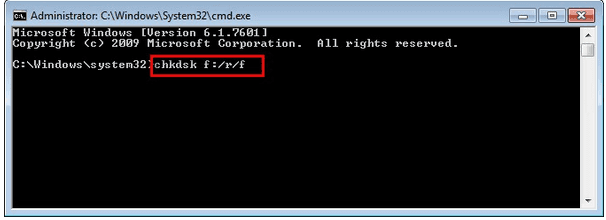
- When it asked to schedule the disk scan, press Y & press Enter
- That’s it, close the command prompt window, and restart your computer.
- Now, it’ll start scanning your disk and fix the issue automatically if detected.
Once done! Run sfc /scannow again to check if it works.
#3: Run SFC Scan In Safe Mode
Whenever you suspect that third-party apps, services, drivers, or startup programs interfere with your system files, run SFC in safe mode to bypass such issues.
Safe Mode launches Windows only with essential drivers, software, and services, which makes it easier for the SFC to identify & repair the corrupted system files.
Here’s how you can run an SFC scan in Safe Mode:
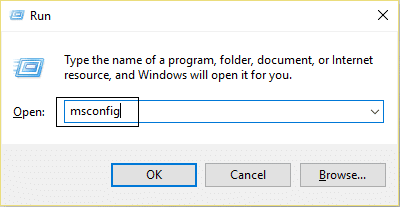
- Launch the Run dialog box by pressing Win + R
- Then, type msconfig in the search box & press Enter to open the System Configuration.
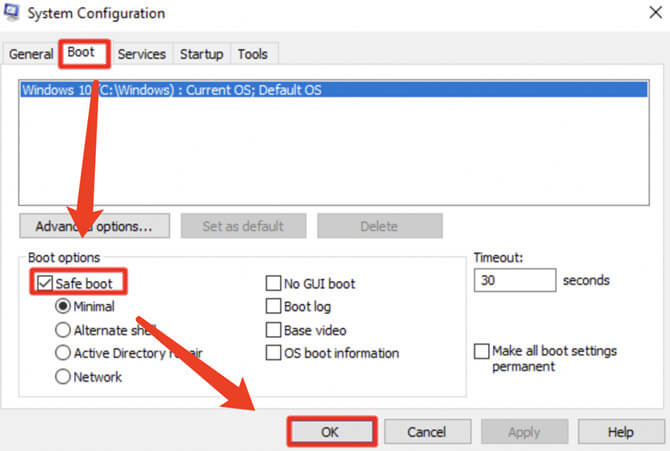
- In the System Configuration windows, navigate to the Boot tab
- Under the boot option, you need to check out the Safe Mode option > Minimal.
- Once done! Click on Apply then > OK to boot your system in Safe Mode.
- Now, open a command prompt window & type the following command to run SFC scan into Safe Mode
sfc/scannow

After finishing the steps, if Windows Resource Protection found corrupt files is fixed successfully in safe mode, it simply means that the issue is caused due to software conflict.
Now, you can uninstall the recently installed programs that might cause the issue.
Also Read – 6 Fixes For “Windows Detected A Hard Disk Problem” Error
#4: Run SFC in Windows Recovery Environment
The Windows Recovery Environment (WinRE) is a diagnostic environment that can be used when your Windows system encounters any critical errors or can’t boot properly.
Running SFC utility in Windows Recovery Environment can help you repair the corrupted or missing system files by verifying & repairing the integrity of a system files.
So, if you find that the system file checker can’t finish its work, try to run it Windows recovery environment.
Here’s how to run SFC in Windows Recovery Environment:
- Boot your system from the Windows installation DVD.
- Then, select “Repair Your Computer” & choose your target system

- Next, choose Command Prompt in the recovery tool panel,
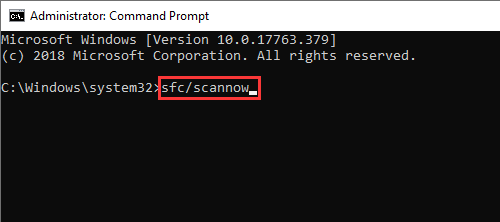
- Under the command prompt window, simply type sfc scannow & press Enter.
#5: Uninstall the Latest Updates
If you are noticing the SFC scan error just after the Windows update, try uninstalling the latest update to fix the issue.
It may happen that the recent updates have introduced some corrupted elements to the system files due to which your SFC scan fails to fix the system files.
How to uninstall the latest Windows updates:
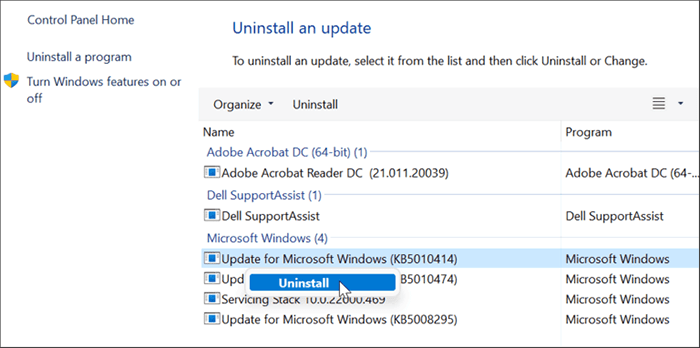
- Open Windows settings by pressing Windows + I keys.
- Then, choose Windows Update from the left pane & scroll down to Update history.
- From here, you can uninstall the latest updates by clicking on the Uninstall option
- After uninstalling the updates successfully, run the SFC scan again & check if the problem is solved.
#6: Performing a System Restore
Another quick method you can try is to perform a System Restore. Here are the complete steps:
- Go to the Start >> type Control Panel.
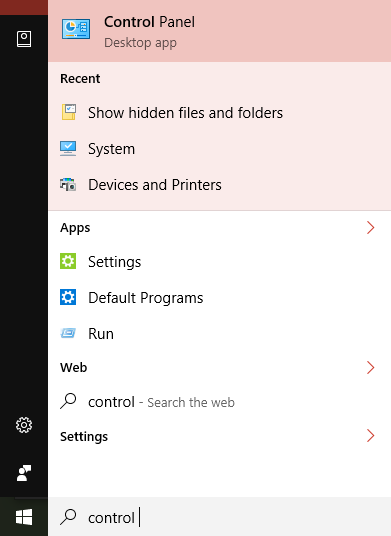
- Then, search the Control Panel for Recovery.
- Choose the Recovery>> Open System Restore >> click Next.
- After that, select the restore point related to the faulty app, driver, or update >> choose Next > Finish.
#7: Reset Your PC From Settings
Many users found this method useful in their cases to fix SFC /SCANNOW windows resource protection found corrupt files but was unable to fix some of them error. So, you can also try resetting your PC.
Here are the steps to be followed:
- Go to Settings on your Windows PC, choose System > Recovery.
- Choose Reset PC.
- After this, select from the options and/or settings in the reset options table.

#8: Perform an In-place Upgrade
If you can’t fix this error with the above methods, it simply indicates that the issue is quite serious and can’t be fixed with the basic strategies.
In such a situation, you need to perform an In-place Upgrade that will rewrite the system files and is almost guaranteed to fix any corruption in the system OS.
In-place upgrade refers to the process of upgrading an existing OS to a newer version without reinstalling it completely.
Also Read –5 Ways to Fix “The Drive Where Windows Is Installed Is Locked”
Tips to Prevent Further Windows Errors
There are several maintenance habits that should be followed to maintain system health. They are as follows:
- Always install Windows updates regularly.
- Avoid forced shutdowns installations.
- Use reliable antivirus tools to block malware threats.
- Run disk cleanup tools periodically.
- Backing up important files also protects against unexpected failures.
FAQs [Frequently Asked Questions]
Why Does Windows Resource Protection Keep Finding Corrupt Files?
If Windows Resource Protection (WRP) keeps finding the corrupt files, it might be due to hardware issues, software conflicts, malware infection, OS process or background running services.
Does SFC Scannow Fix Corrupt Files?
Yes, the sfc/scannow command helps to repair the corrupted or missing system files in the Windows OS. When you run the 'sfc /scannow' in Command Prompt, it checks for the integrity of system files and replace the corrupted files with the cached copy located in the compressed folder at %WinDir%System32dllcache.
What Is The Difference Between Sfc And CHKDSK?
SFC analysis your system files and attempt to repair the corrupted or missing system files which are essential for proper functioning of Windows OS. While the CHKDSK is primarily used to check and repair the issues related to file system. It scans for the disk, such as bad sectors, faulty drive, directory errors etc and attempts to fix them.
Final Thoughts
The Windows Resource Protection found corrupt files error signals damaged system files. However, several reliable solutions exist.
First, run the SFC scan to repair protected files. If the problem continues, use the DISM repair tool or other methods mentioned above. Checking the disk also helps fix underlying storage errors.
Following these methods ensures a stable and reliable Windows environment.
Hope you found this post helpful!
References:

Taposhi is an expert technical writer with 5+ years of experience. Her in-depth knowledge about data recovery and fascination to explore new DIY tools & technologies have helped many. She has a great interest in photography and loves to share photography tips and tricks with others.